
How to Measure Body Fat in 2026: A Complete Guide
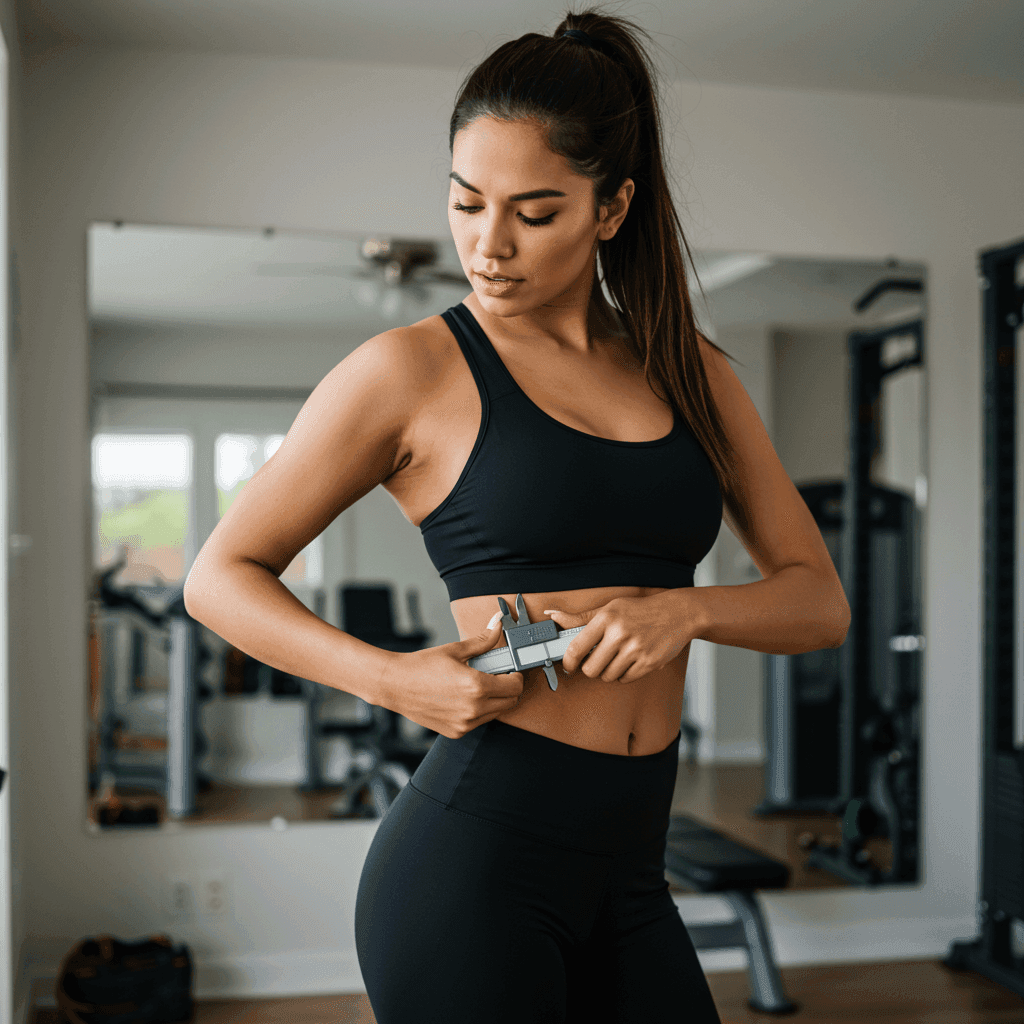
Body fat percentage can tell you something the scale cannot: whether your weight is mostly changing from fat mass, lean mass, water, or normal day-to-day fluctuation. That makes it useful for fat loss, muscle gain, body recomposition, and long-term health tracking.
The catch is that body-fat testing is never perfectly exact. Even good methods have assumptions. A single reading can be thrown off by hydration, food volume, training soreness, device type, technician skill, or the equation used to convert measurements into an estimate.
The best approach is simple: choose the right method for your goal, repeat it under similar conditions, and judge the trend instead of treating one number like a final truth.
Quick Answer
- Best clinical option for most people: DEXA, if you want regional fat, lean mass, and bone-density context.
- Best at-home method: tape measurements plus progress photos, because they are cheap, repeatable, and easy to compare.
- Best budget body-fat estimate: skinfold calipers, if the same trained person measures the same sites each time.
- Best convenience method: a BIA smart scale, if you care about direction over precision.
- Best overall tracking setup: combine body fat estimates with weight averages, waist measurements, photos, strength, calories, sleep, and recovery.
If you only remember one rule, make it this: consistency beats precision for most fitness goals. A rough method used consistently is often more useful than an expensive test you repeat once a year.
Body Fat Measurement Methods Compared
| Method | Best for | Strength | Main limitation |
|---|---|---|---|
| DEXA / DXA | Detailed clinical-style snapshot | Estimates fat, lean mass, and bone by region | Cost, access, radiation exposure, machine differences |
| Hydrostatic weighing | Lab-style density estimate | Established research method | Uncomfortable and hard to find |
| Bod Pod | Density estimate without water | Quick and non-invasive | Clothing, hair, and protocol can affect results |
| BIA smart scale | Frequent home trends | Fast, cheap, easy | Hydration and timing can move the number |
| Skinfold calipers | Budget trend tracking | Good when measured by the same skilled person | Technique-sensitive and hard to self-measure |
| Tape measurements | Practical home tracking | Excellent for waist and shape changes | Does not directly measure body fat |
| Photos and clothing fit | Visual progress | Captures change the scale misses | Subjective unless standardized |
DEXA: The Most Useful Widely Available Snapshot
DEXA, also called DXA, uses low-dose X-ray imaging. It is best known for bone-density testing, but whole-body scans can also estimate fat mass, lean mass, and regional distribution.
Choose DEXA if you want:
- A more detailed baseline than a home scale can provide.
- Regional information, such as trunk fat versus limb lean mass.
- Bone-density context.
- A check-in every few months during a serious body-composition phase.
Do not treat DEXA as perfect. Results can still vary by machine, software, hydration, recent training, and positioning. If you repeat scans, try to use the same facility, same machine, similar time of day, and similar pre-test conditions.
DEXA is usually unnecessary every few weeks. For most people, every 8-16 weeks is plenty if they are actively changing body composition.
Bod Pod and Hydrostatic Weighing
Hydrostatic weighing estimates body density by comparing your weight on land with your weight underwater. Bod Pod testing estimates body density through air displacement.
Both can be useful, but they are less convenient than DEXA for most people. Hydrostatic weighing requires full submersion, which many people dislike. Bod Pod testing is easier, but clothing, hair, and testing protocol matter.
These methods make sense if:
- A sports lab near you offers them.
- You want a periodic external check.
- You can repeat the same protocol each time.
They are less useful if you can only do them once, because the trend matters more than the first estimate.
BIA Smart Scales: Useful, but Noisy
Bioelectrical impedance analysis, or BIA, sends a small electrical current through the body and estimates body composition based on resistance. Home smart scales and handheld devices usually use some version of BIA.
BIA is popular because it is easy. Step on the scale and you get body weight, body fat percentage, muscle mass, water, and sometimes visceral-fat estimates.
The problem is that BIA is very sensitive to conditions:
- Hydration.
- Recent meals.
- Alcohol.
- Sodium intake.
- Exercise.
- Skin temperature.
- Menstrual-cycle phase.
- Whether the device measures foot-to-foot, hand-to-hand, or multiple segments.
Use a BIA scale for trends, not truth. Measure in the morning after using the bathroom, before food or training, and compare rolling averages over several weeks. If the scale says your body fat changed 2% overnight, that is almost certainly water and device noise, not actual tissue change.
Skinfold Calipers: Good When Technique Is Consistent
Skinfold calipers estimate subcutaneous fat by measuring fold thickness at standardized sites. Common protocols use three, four, or seven sites.
Calipers can work well when:
- The same trained person measures you.
- The same sites are used every time.
- The same equation is used.
- You care about the trend more than the absolute percentage.
They work less well when you self-measure hard-to-reach sites, switch testers, or compare one equation with another. Calipers also estimate subcutaneous fat, not visceral fat, so they can miss some health-relevant fat distribution changes.
Tape Measurements: The Best Low-Tech Option
A tape measure will not directly tell you body fat percentage, but it is one of the most useful tools for real progress.
Track these at minimum:
- Waist.
- Hips.
- Chest.
- Upper arm.
- Thigh.
- Body weight weekly average.
The waist is especially useful because it often changes when fat loss is happening, even if weight is masked by water or muscle gain. If your waist is shrinking, progress photos are improving, and strength is stable, your body composition is likely improving even if a body-fat estimate looks noisy.
For health-context ratios, use the waist-to-hip ratio calculator. For body composition planning, the body recomposition calculator and Katch-McArdle calculator can help turn body-fat and lean-mass estimates into practical calorie targets.
Progress Photos: Not Precise, but Powerful
Photos are not a measurement in the strict sense, but they catch changes that numbers miss.
Use this setup:
- Same room.
- Same lighting.
- Same distance from camera.
- Same poses: front, side, back.
- Same clothing.
- Every two to four weeks, not every day.
Photos are especially helpful during body recomposition. You may look leaner while scale weight barely moves because fat loss, muscle gain, water, and glycogen are offsetting each other.
How Often Should You Measure Body Fat?
The right cadence depends on the method.
| Method | Sensible cadence |
|---|---|
| DEXA / Bod Pod / hydrostatic | Every 8-16 weeks |
| BIA scale | 2-7 times per week, averaged |
| Skinfold calipers | Every 2-4 weeks |
| Tape measurements | Weekly or every 2 weeks |
| Progress photos | Every 2-4 weeks |
Measuring more often does not always create better decisions. If frequent body-fat checks make you anxious or reactive, measure less often and focus on habits.
How to Avoid Misleading Results
Use the same conditions every time:
- Measure in the morning.
- Use the bathroom first.
- Avoid hard training beforehand.
- Keep hydration similar.
- Keep sodium and carbs reasonably consistent before check-ins.
- Use the same device, tester, and formula.
- Record notes when travel, soreness, poor sleep, or cycle changes could explain a jump.
Then compare trends:
- 4-week waist trend.
- 4-week weight average.
- Photos every 2-4 weeks.
- Strength performance.
- Calories, protein, steps, sleep, and recovery.
Body-fat percentage is useful only when it helps you make better decisions. If the number makes you ignore obvious progress, it is doing the opposite.
What Body Fat Ranges Mean
Body-fat ranges vary by sex, age, genetics, sport, and medical context. Very low body fat is not automatically better. It can come with low energy, poor sleep, reduced libido, menstrual disruption, irritability, worse training, and higher injury risk.
Use these as rough fitness context, not medical categories:
| Goal context | Men | Women |
|---|---|---|
| Very lean / stage or sport-specific | Often under 10% | Often under 18% |
| Athletic-looking for many people | About 10-15% | About 18-23% |
| Fit and sustainable for many people | About 15-20% | About 23-30% |
| General health improvement focus | Often 20%+ | Often 30%+ |
The healthiest range is the one that supports your labs, energy, hormones, training, sleep, mental health, and life outside tracking. Talk to a clinician if you are aiming for very low body fat, managing a medical condition, recovering from disordered eating, or seeing unexplained body changes.
What to Do With Your Result
Once you have an estimate, do not immediately chase a lower number. Decide what the result means in context.
| Situation | Best next step |
|---|---|
| Body fat estimate down, waist down, strength stable | Keep going |
| Body fat estimate up, waist same, weight up after salty food | Wait and recheck |
| Estimate flat, waist down, photos better | Trust the broader trend |
| Estimate down fast, strength and energy worse | Your deficit may be too aggressive |
| Estimate up, waist up, weight up for 4+ weeks | Audit calories, activity, and consistency |
This is where an app like Bodly helps. Body-fat data is more useful when it sits next to calories, body weight, measurements, progress photos, activity, sleep, stress, heart rate, recovery, and calories burned.
Common Mistakes
- Comparing DEXA results with a home BIA scale as if they are the same method.
- Reacting to a single BIA reading.
- Measuring after a hard workout.
- Switching caliper equations mid-plan.
- Taking progress photos in different lighting.
- Ignoring waist measurements.
- Assuming lower body fat is always healthier.
- Using body-fat percentage to judge daily self-worth instead of long-term progress.
The Practical Takeaway
The best way to measure body fat is the method you can repeat consistently and interpret calmly. DEXA is useful for a detailed snapshot. BIA scales are useful for easy trends. Calipers can work with good technique. Tape measurements and photos are the best low-cost foundation.
For most people, the winning setup is not one perfect number. It is a dashboard: weekly weight averages, waist measurements, progress photos, strength, calories, protein, sleep, stress, recovery, and a body-fat estimate used as one signal.
If you want a fuller tracking routine, start with 10 tips for effective body tracking with Bodly, then use the FFMI calculator to understand muscularity and the body recomposition calculator to plan your next phase.
Keep reading
For the tape-measure half of that dashboard, how to take body measurements gives exact placement for eight sites, and the best free weight and weight loss tracker apps compares where to record them so the readings turn into a trend.
Sources and Further Reading
Frequently asked questions
What is the most accurate way to measure body fat?
DEXA is one of the most useful widely available clinical methods because it estimates fat, lean mass, and bone density by region. Research-grade multi-compartment models can be more precise, but they are less accessible. At home, tape measurements, skinfold calipers, and BIA scales are better for trends than exact body-fat numbers.
What is a healthy body fat percentage?
Healthy ranges depend on sex, age, training status, and medical context. As a rough fitness reference, men often aim somewhere around the mid-teens to low 20s, while women often aim somewhere around the low 20s to low 30s. Very low body fat can be risky, especially when energy, hormones, mood, sleep, or performance suffer.
Can I measure body fat at home?
Yes. Skinfold calipers, bioelectrical impedance scales and tape-measure circumference formulas all work at home. They're less accurate than a DEXA scan but great for tracking change over time when used consistently.
How often should I measure my body fat?
Every 2–4 weeks is enough to spot meaningful trends. Measuring more often mostly captures day-to-day noise from hydration and food. Always use the same method and the same conditions.
Is body fat percentage better than BMI?
For most fitness goals, yes. BMI can't tell muscle from fat, so it mislabels muscular people as overweight. Body fat percentage directly reflects composition, giving a clearer picture of health and progress.
Related reading
How Accurate Is Apple Watch Calorie Tracking? (What the Research Says)
Apple Watch measures heart rate within a few percent and calories within about 20-40%. Here's why the gap is so large, which activities it gets most wrong, how to calibrate it, and how to use the number without wrecking your deficit.
Garmin Body Battery Explained (And How to Get It on Apple Watch)
What Body Battery actually measures, how Garmin calculates it from HRV, stress and sleep, what a normal range looks like, why yours never hits 100 - and how to get the same energy score from an Apple Watch.
How to Increase HRV: What Actually Works (Ranked by Effect Size)
Most HRV advice is a list of twenty things with no sense of which matter. Here they are ranked by effect size and time-to-effect, plus the troubleshooting order for a low HRV and how long to wait before judging a change.